
The Maple Leaf Forever
Let the Games begin! The meaning of Stephen Harper's portrait. New from Canada Spends. And you want events? We've got events.

A PM in Full
Stephen Harper just spent a week in Ottawa being feted as probably the most important Canadian prime minister of this increasingly dog-eared century. It is worth taking stock of how significant this is.
There is a recurring arc to the life of a Canadian prime minister. It begins with an initial burst of energy and enthusiasm, with the leader and party swept to office on a wave of optimism about the country and its promised direction. This lasts for most of an election cycle, even as the initial shine is slowly dulled by the inevitable procession of political missteps, failed promises, indecision, and scandal. A second election comes, with victory coloured by diminished hope and expectation. This leads to a steady narrowing of focus and ambition, as the prime minister retreats into a bubble of trusted advisers feeding him narrative and policy aimed at only the most die-hard of the party supporters.
As things evolve, the caucus gets restive, there is division in the ranks and talk of a leadership challenge. But then there’s maybe one last election, a final attempt at recapturing the old magic, followed by some admixture of political disillusion, electoral defeat, and public opprobrium. In the end, most prime ministers, when they finally leave office, are widely disliked, even despised.
When you think about it, it is actually a bit crazy how we just take this pattern for granted. Trudeau, Mulroney, Chrétien, Harper, and then Trudeau again all left office with their caucuses in disarray, their party’s fortunes largely in the dumps, their personal reputations deeply tarnished. The only former first ministers in memory who haven’t suffered this fate are those who simply didn’t serve long enough for the public to turn on them — Clark, Turner, Campbell, Martin.
If there is a silver lining in all of this for former prime ministers, it is that this arc usually has a redemptive coda, as memories go fuzzy, anger fades, reputations recover. The iron judgment of history can turn what looked at the time like political miscalculation into acts of true vision. This isn’t always the case (Pierre Trudeau’s reputation is, if anything, getting worse over time) and for some, such as Brian Mulroney, the reputational salvage job was the work of a lifetime.
Then there is Stephen Harper. The occasion of his week in Ottawa was the formal unveiling of his official portrait, painted by Phil Richards, an event that might have seemed like a rote entry in the parade of Canadian political ritual, but which in fact revealed something deeper about the almost existential role of the prime minister in the Canadian political firmament.
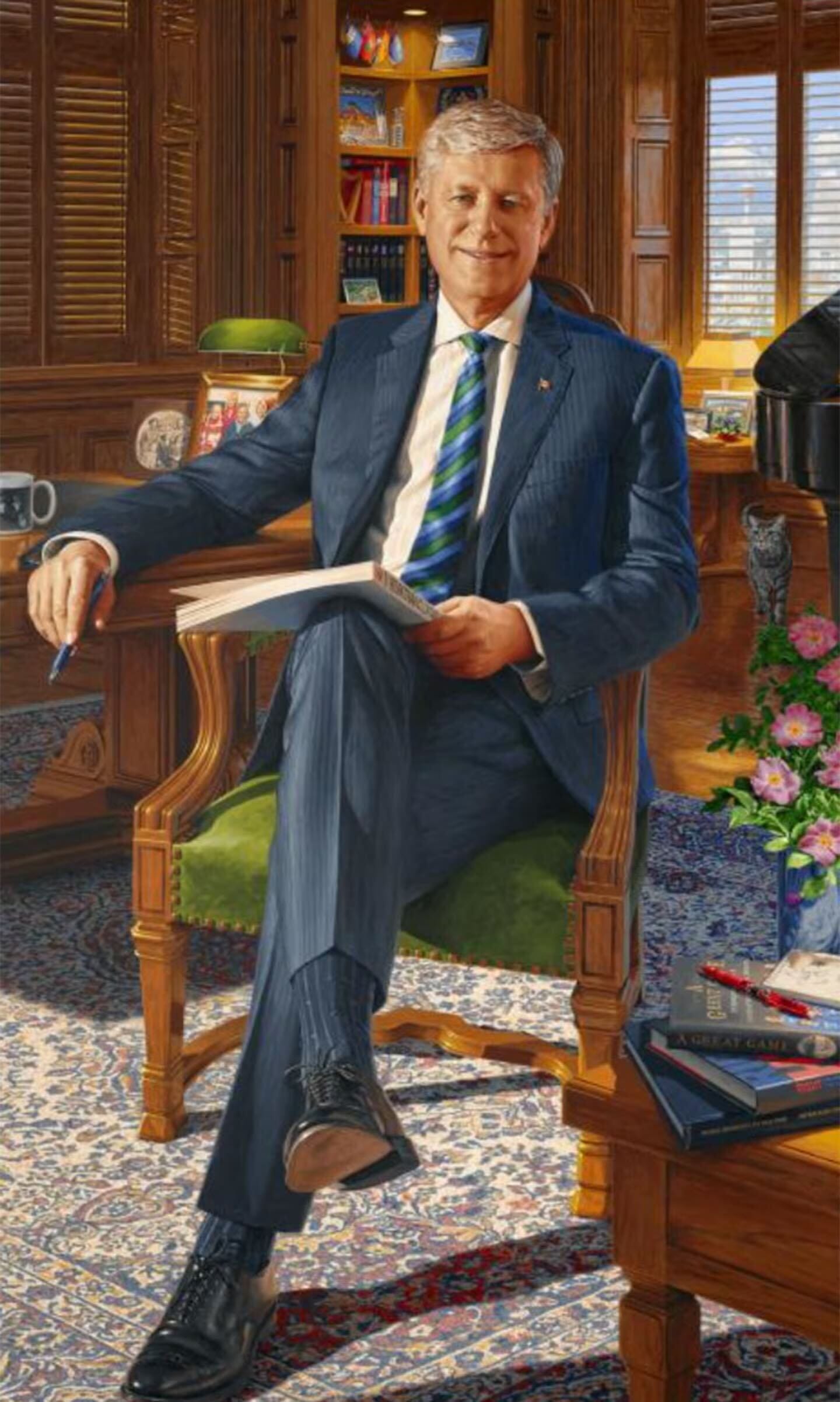
For most politicians, portraits are about vanity and legacy. Portraits hang in halls no one ever visits; they’re visual end-notes, signifiers of a career already over. Not for Harper. Standing in the Sir John A. Macdonald Building, encircled by former staffers, colleagues, officials, functionaries and politicos past and present, Harper didn’t speak like a retired partisan reminiscing about old battles. He talked, plainly and urgently, about Canada’s unity and independence.
“I sincerely hope that mine is just one of many portraits of prime ministers from both parties that will continue to be hung here for decades and centuries to come,” he said. “But that will require that in these perilous times, both parties, whatever their other differences, come together against external forces that threaten our independence and against domestic policies that threaten our unity.”
That rhetoric, about sacrifice, unity, and the preservation of the country as an idea, is not the typical self-patting on the back you expect when former leaders return to the capital to see themselves immortalized on canvas. There’s a bit of a reflexive cynicism in Canadian political culture about national unity, a sort of dullness brought on by decades of constitutional infighting. Quebec separatism, Western alienation and the perennial complaining about tyranny of Ottawa are familiar tropes, but only rarely have they felt like genuine existential threats. Yet here was a former prime minister, the architect of a decade-long Conservative government and a leader often portrayed as bland or purely managerial, using the platform of his portrait unveiling to articulate something resembling a philosophy of the job.
Harper was giving voice to an understanding that Canada is not an accident of geography, but a deliberate political and cultural project that requires cultivation, care, and sometimes, statesmanship. In Alberta, in Quebec, in Newfoundland, in rural and urban Canada, in the far North and the distant West, there are very different visions of what the country should be, and they often tug in opposite directions. Stephen Harper knows this, which is why his emphasis on unity and independence, on a collective project that binds disparate regions and identities into a shared polity, betrays an acute awareness of something that perhaps only those who have held the job truly grasp: that the prime minister’s primary job is not policy, not partisanship, not even governance in the everyday sense — it is to keep the country whole.
If you doubt that this is an enduring concern, consider the wider context of Harper’s comments. He shared the stage not just with Conservatives, not just with his own party’s faithful, but with figures from across the political spectrum. Former prime minister Jean Chrétien, whose political style is famously different from Harper’s, joined him earlier in the week at an event in Ottawa to speak about Canadian patriotism and unity amid rising global tensions. They weren’t merely performing a cross-partisan photo op; they were signaling something deeper, namely, that Canada’s unity must transcend the usual partisan divides, that its survival is a project bigger than any one party or ideology.
“We must preserve Canada, this country handed down to us by providence, preserved by our ancestors, and held in trust for our descendants”
And that’s the lesson here. The enduring work of holding Canada together doesn’t stop because a prime minister leaves office. It doesn’t end with an election loss or a change of party. Canada, as a political entity, is perpetually under strain from global economic pressures, from cultural and regional fissures, from its massive geography and the centrifugal forces it contains. In times like these, when talk of separatism flickers back into respectability in both Quebec and Alberta, when external geopolitics pose real questions about sovereignty and autonomy, the reminder that unity is not a given but a continuous project is a vital one.
That is what Harper seemed to grasp in Ottawa this week. Not that he wants to be prime minister again — that ship has sailed — but that the office he once held represents something enduring: a locus of responsibility for the nation’s coherence. One wonders how many other former prime ministers ever arrived at this conclusion, that being a prime minister doesn’t end in any meaningful way. You might pay a visit to the Governor General and formally resign, but the work of sustaining Canada persists.
So if there is any reason we should wish the reputations of former prime ministers to be rehabilitated in the public mind, even those once reviled or forgotten, it is because ensuring Canadian unity is a job that is never done. In that sense, one never really stops being a prime minister. For that lesson alone — crystallized in the unlikeliest of venues, a portrait unveiling with Jean Chrétien and Mark Carney on either side of him — we should be grateful to Stephen Harper.
What’s new at Build Canada
2026 Events are Picking Up at Build Canada


We’re grateful to the 400+ Canadians who have joined us at one of our first events of the year over the passing three weeks – if that was you, kudos. You’re doing your civic duty of getting involved.
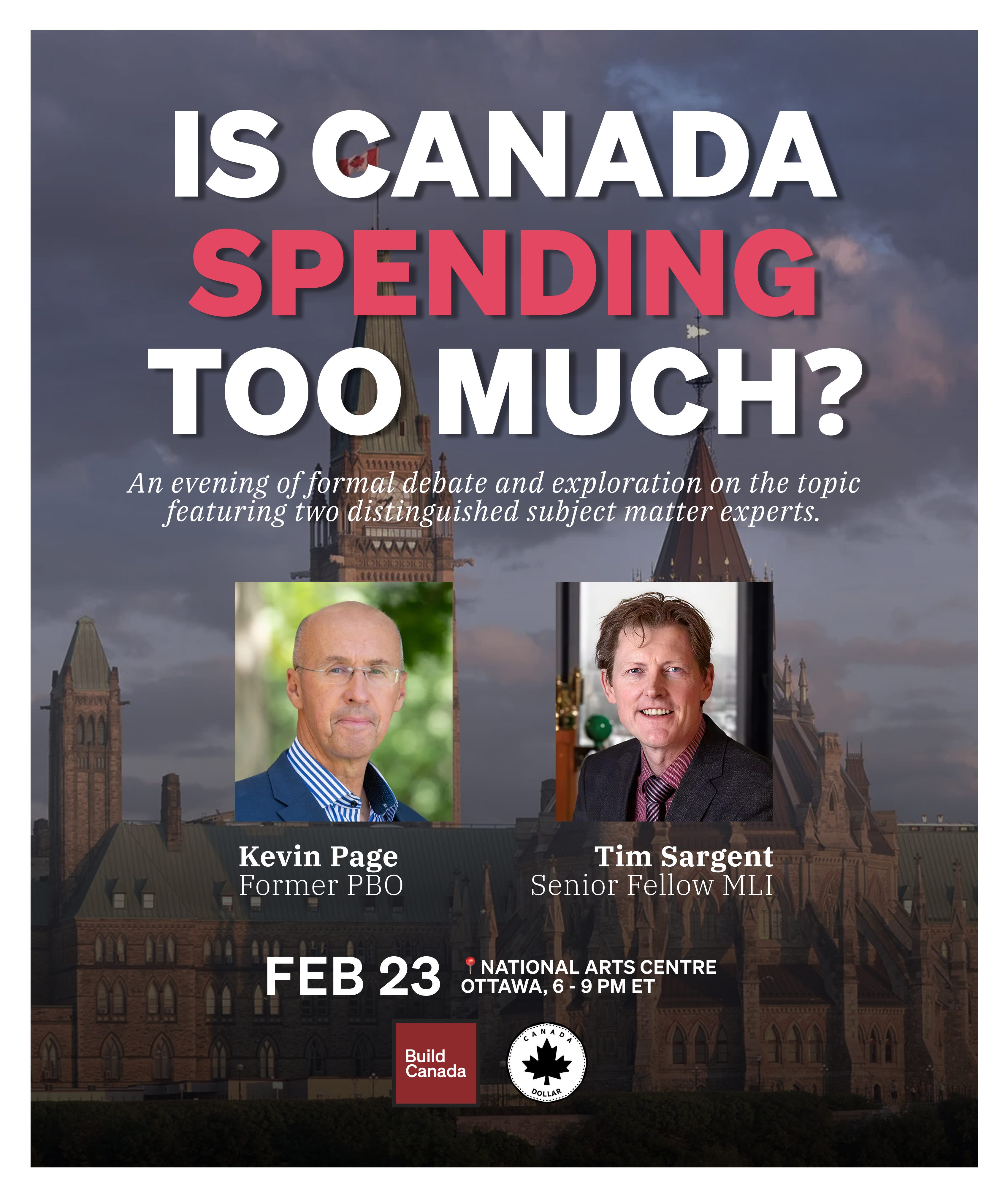
We have a very special event coming up soon – a debate between the former (and first ever) Parliamentary Budget Officer Kevin Page and esteemed economist Dr. Tim Sargent on Feb 23 at the National Arts Centre in Ottawa. Sign up here.
Check out our other events on our Luma Calendar. More will be announced next week.
New from Canada Spends
We built a tool to make it easy for Canadians to understand how First Nations are funded and how they spend that money. We scraped over 10,000 financial statements and schedules of remuneration that First Nations disclosed under the First Nations Financial Transparency Act.
We then processed those documents to extract revenue, expenses, accumulated surplus (which includes both financial assets and physical assets like roads and water systems) and council remuneration into an easily processable format. We also scraped historical data going back to 2007 of First Nations registered population to make it easy to understand the scale of our First Nations. Lastly, we scraped First Nations legal Claim data from the Reporting Centre on Specific Claims.
This is all accessible on our easy to use, fast website with source documents accessible directly from the page for easy verification.
Portrait Gallery
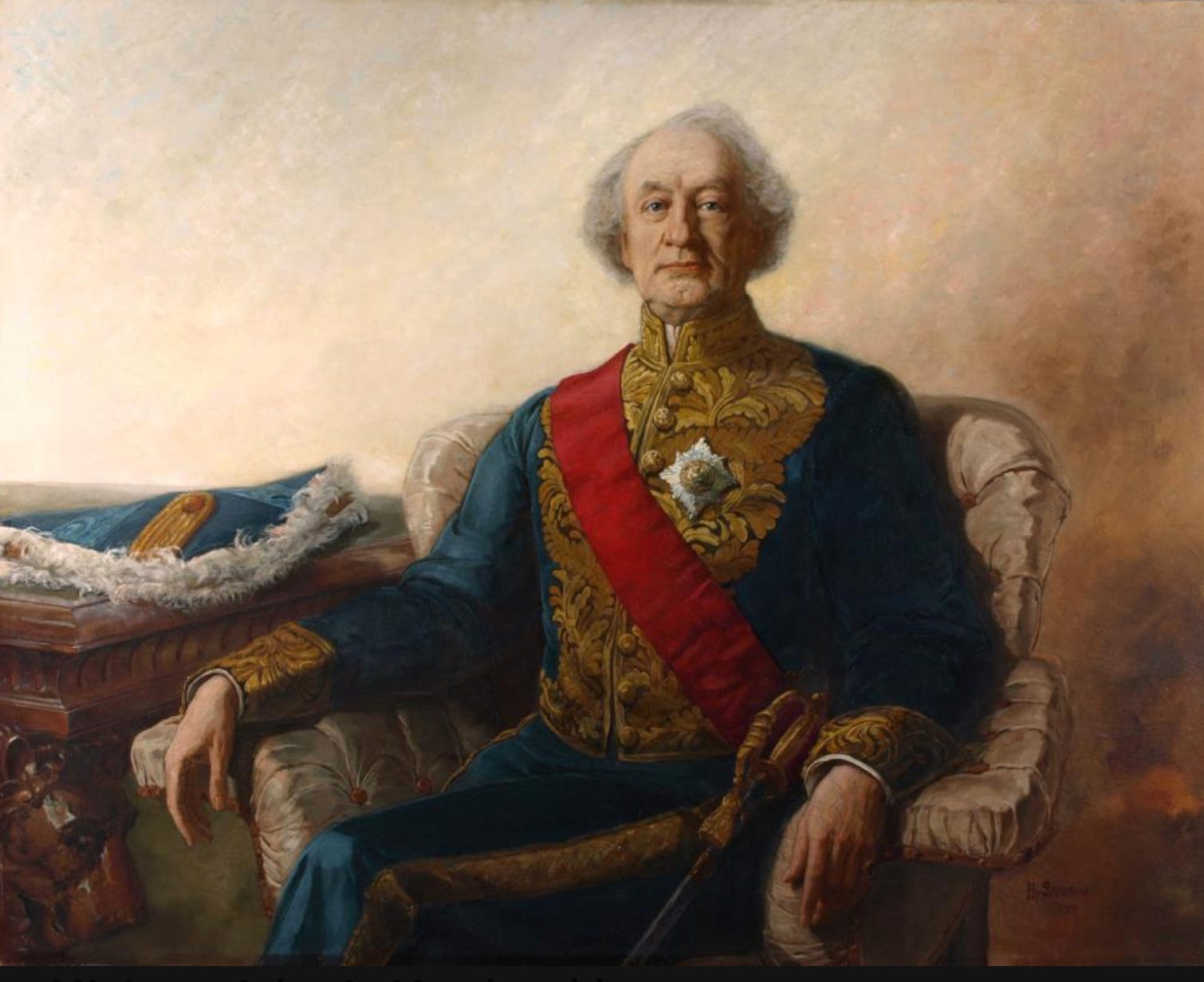
The National Post has a good piece about the thinking behind Stephen Harper’s portrait, as well as an exploration of the hidden clues and Easter eggs of meaning in Phil Richards’ work. On prime ministerial portraits more generally, the House of Commons website has a gallery of all of them, while in 2013 the Government of Canada published a lovely guide to each portrait, the artist, and the subject.
What else we’ve been reading
Yay! The refurbishment of the Darlington nuclear power plant came in four months early and $150 million under budget.
Boo! This Toronto doctor has 2000 patients but can’t get permanent residency.
Yay! Federal public servants are being ordered back to the office four days a week starting in July.
Boo! Montreal’s crumbling infrastructure is seemingly beyond repair
Yay! Y-Combinator reverses its earlier decision and has added Canada back to its list of accepted countries of incorporation.
Boo! Wada to investigate penis-injection accusations of cheating in Olympic ski jumping.
Get weekly, no-fluff insights on building a more prosperous Canada. Tap “Subscribe” now and be first in line for next week’s brief. Then forward this email to one friend who cares as much as you do—let’s build together.
Nothing gets me as amped as the Olympic Games. One of our chances to shine on the global stage. I have confidence we'll do well this season IF the athletes will stop injuring themselves in practice!!
It is fitting to see Kevin Page in your events list alongside a piece on Harper. Harper actually created the Parliamentary Budget Officer role in 2006. He passed the Federal Accountability Act to put an independent watchdog over government spending. That law changed how we read the budget. It forced departments to open their books to scrutiny they never faced before. Even if they clashed later, that structural change remains Harper’s biggest impact on government data.