
How to properly evaluate a trade deal
If you are wondering who won or lost in the Canada-US trade negotiations, you are asking the wrong question.

Put away the scorecards
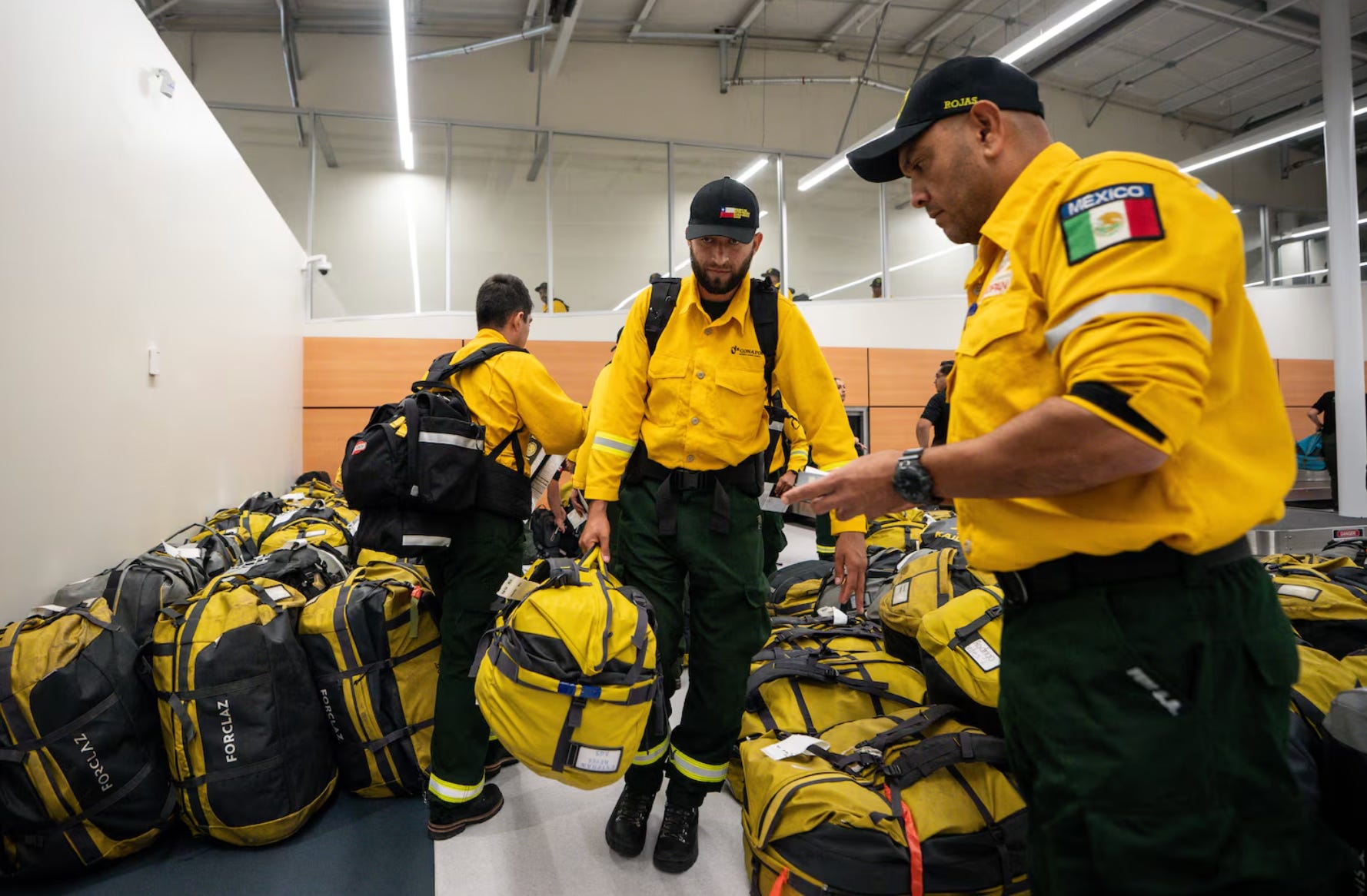
If the buzz coming out of Ottawa and Washington means anything, Canada and the United States might be coming close to something resembling a deal on trade. According to the latest reporting, the two countries have traded detailed proposals for an interim agreement ahead of the August 19 deadline, when Donald Trump’s threatened 50 percent tariffs on roughly $20 billion of Canadian goods (imposed, if you’re keeping track of the various invented pretexts, over wildfire smoke) are set to land. The shape of the swap seems to be that Canada lifts its retaliatory tariffs on US autos, ends the provincial bans on American alcohol, loosens procurement rules that favour domestic suppliers, and adjusts how it applies its dairy tariff-rate quota. In exchange, Washington trims, but crucially, does not remove, the Section 232 tariffs on steel, aluminum, autos and lumber that have been strangling those sectors since last year.
Within hours of that reporting, the commentary sorted itself into its usual two camps. Dairy Farmers of Canada declared that “food sovereignty is not for sale.” Quebec’s premier says the SAQ will keep American booze off the shelves no matter what Ottawa signs. On the other side, Carleton’s Fen Osler Hampson reached for Munich, casting Carney as Chamberlain: an appeasing leader playing a weak hand, buying time through concessions that will mean nothing to a negotiating partner who doesn’t consider himself bound by his own signature.
Both camps are answering the same question: did Canada win or lose this round against Donald Trump? But this is Trump’s question. His entire theory of trade is that it’s zero-sum, that someone is always being taken advantage of, and that the job of a leader is to make sure it isn’t you. Once you accept that framing, “elbows up” and “capitulation” are the only two things a deal can be. Every clause becomes a scorecard entry under one of those two columns.
We need not accept this way of looking at it. Trade, done right, isn’t zero-sum, so the question worth asking isn’t who won the news cycle. Our focus should be narrower, less partisan, and frankly more boring: does this specific package leave Canada more sovereign, more united, and more prosperous than the status quo? If yes, take it, and stop with the performances about it. If no, we should say so on the merits of the deal, not because any concession feels like losing.
That is why it is helpful to actually run down the list of what seems to be on the table. Some of the items look good, others not so much. The alcohol ban is the easiest call. In many areas Canadians have already voted with their wallets, as American products here have been hammered by boycott as much as by policy. Restocking American rotgut with clear country-of-origin labelling costs Canada almost nothing and lets the market keep doing what it’s already doing in many sectors. We can adopt the same logic on dairy. Indeed, Canada lost the 2023 CUSMA panel ruling on exactly this dispute, under a different American president. Conceding a fight you already lost fair and square isn’t capitulation.
The procurement issue is more interesting, and this is where the “sovereignty and prosperity” test actually finds some traction. If loosening Buy-Canadian rules means cheaper, faster infrastructure, that’s worth doing on its own terms regardless of what Washington wants in return. And there’s a bigger prize sitting in plain sight that has nothing to do with the Americans at all: Canada still hasn’t fixed interprovincial procurement and trade barriers, a rules problem entirely of our own making and entirely within our own power to solve. Any negotiation that keeps Ottawa and the provinces talking seriously about internal trade is doing more for national prosperity than anything Jamieson Greer can offer.
The Hampson warning still deserves a hearing, though not the precise one he’s making. The real risk isn’t appeasement in the abstract; it’s the actual track record on this. Carney has already cancelled the digital services tax, agreed to split toll revenue on the Gordie Howe Bridge, and rolled back Canadian-content rules for streaming services. Each one was pitched at the time as a good-faith gesture that would unlock American reciprocity. None of it has been reciprocated yet, and likely never will be. If the concessions on the table now follow that same script, where Canada gives, the tariffs stay roughly where they are, and Washington moves on to its next complaint, then this isn’t a strategic pause bought with patience. It’s just the same American bully tactics, with concessions pocketed and new items added to the wishlist.
Recent polling suggests that Canadians are growing tired of Washington’s games, with more than three-quarters of respondents preferring a good deal over a fast one, and a majority — including a striking share of Conservative voters — rating Carney’s handling of this file as good or acceptable, CPC leader Pierre Poilievre’s objections notwithstanding. The country appears to have quietly concluded that its own long-term interests, not the partisan “Elbows up/Elbows Down” scorekeeping, is the only thing worth tracking.
That’s the standard this deal, or any deal, to which any deal should be held: not whether Mark Carney out-negotiated a man who thinks Canada is nasty, or whether he sold Canadians a bill of goods with his “rupture” rhetoric, but whether Canada comes out the other side of this more sovereign, more united, and more prosperous than it was going in. Everything else is noise.
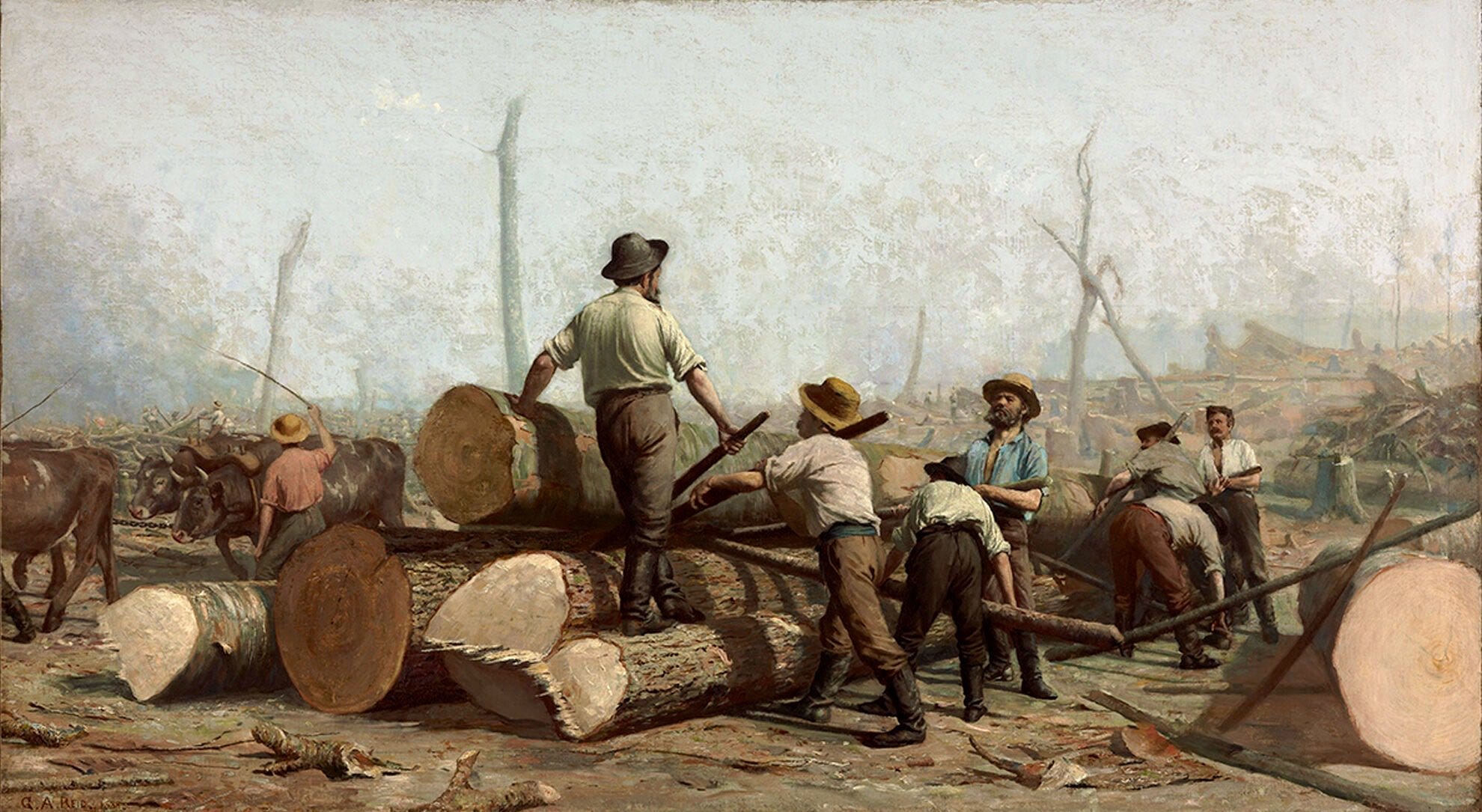
“Logging”
George Agnew Reid, 1888, via Canada The Unknown Country
Build Canada Merch
Summer is racing away, but there is still time to get styling. Head over to 🛒: shop.buildcanada.com


Understanding Canada: Why aren’t we winning more?
This week in Building Canada
Aug 9: Nine Canadian peacekeepers were killed on this day in 1974 when their aircraft was shot down by Syria. This day is now commemorated as National Peacekeepers Day.
Aug 10: On this day in 1960, John Diefenbaker’s precursor to the Charter, The Canadian Bill of Rights, received Royal Assent, Diefenbaker’s precursor to the Charter.
Aug 12: At 12:40 am on this day in 1992, Canada, the US, and Mexico announced the completion of NAFTA negotiations.
Aug 13: The Canadian Women’s Army Corps, integrating women into the Canadian military, was established on this day in 1941.
Aug 14: On this day in 1937 Mackenzie King established the Rowell-Sirois Commission (Royal Commission on Dominion-Provincial Relations). The landmark inquiry into federal-provincial fiscal relations eventually shaped equalization payments and forever altered the fiscal and political structure of the federation.
Canada’s Peacekeeping Monument
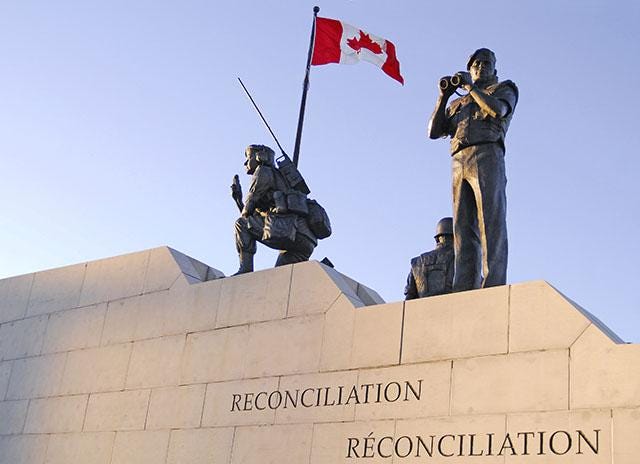
Reconciliation, better known as the Peacekeeping Monument, sits just off Sussex Drive in Ottawa, flanked by the National Gallery on one side and the American embassy on the other. Unveiled on October 8 1992, it’s the product of a 1990 design competition run jointly by the Department of National Defence and the National Capital Commission, launched at a moment when peacekeeping was still considered a signature Canadian export rather than a faded Cold War artifact.
The winning team was entirely British Columbian: sculptor Jack Harman, urban designer Richard Henriquez, and landscape architect Cornelia Oberlander. Harman, who was already known for public commissions such the Harry Jerome statue in Stanley Park, cast three bronze soldiers — two men, one woman — standing watch atop two converging concrete walls rising out of a bed of broken rubble. The walls meet at a single point, meant to represent conflict resolving into peace.
What else we’ve been reading
“Canadian governments should be concerned about wider trends pushing us away from caring about economic growth,” writes Mike Moffat in the Globe and Mail.
A group of former high-level public service executives and private-sector CEOs is aiming to advise the government on how it can better execute the priorities of Prime Minister Mark Carney and Clerk of the Privy Council Michael Sabia.
Students from a Calgary high school have become the first Canadian winners of an autonomous-vehicle competition at a Massachusetts Institute of Technology summer institute.
Canadian Olympic hero Clara Hughes talks about the summer job that taught her the importance of willpower.
Get weekly, no-fluff insights on building a more prosperous Canada. Tap “Subscribe” now and be first in line for next week’s brief. Then forward this email to one friend who cares as much as you do—let’s build together.
Good read.